Category:Scraping ToolsView as Markdown
Top 6 Zyte Alternatives for Web Scraping and Crawling in 2026

Lead Software Engineer


It's early 2010, first Avatar movie just released a few months ago and is about to win an Academy Award for best production.
Cloudflare, the absolute worst enemy of web scrapers, was recently established and didn't even have a product yet.
Two pioneers of web scraping, Shane Evans and Pablo Hoffman, launch Zyte in Ireland, then known as Scrapinghub; months before official launch of Cloudflare. They create a brand new category of software.
Why am I telling you this the-chicken-or-the-egg story?
Just to let you know that Zyte has been doing web scraping for the last 15 years, with thousands of businesses using the API and it's newer products for collecting data from the web, at scale.
But you're here because you don't fit in these thousands of people. You need another solution.
You're in the right place. We'll explore 6 alternatives to Zyte for different use cases, but we need to start with its pros and cons first.
What Zyte Does Well
Before we dive into alternatives, let's give credit where it's due. Zyte didn't survive 15 years in this industry by accident, it's one of the best web scraping APIs on the market.
Open-Source Framework: Scrapy
Scrapy launched in 2008, and in 2011 Scrapinghub (now Zyte) became its official maintainer. With 59.1k GitHub stars, it's the most popular web scraping framework in existence.
Even though they turned it into a paid product with Scrapy Cloud (which isn't a great sign for the open-source community), they've been consistently improving the library. The last update was just a few weeks ago.
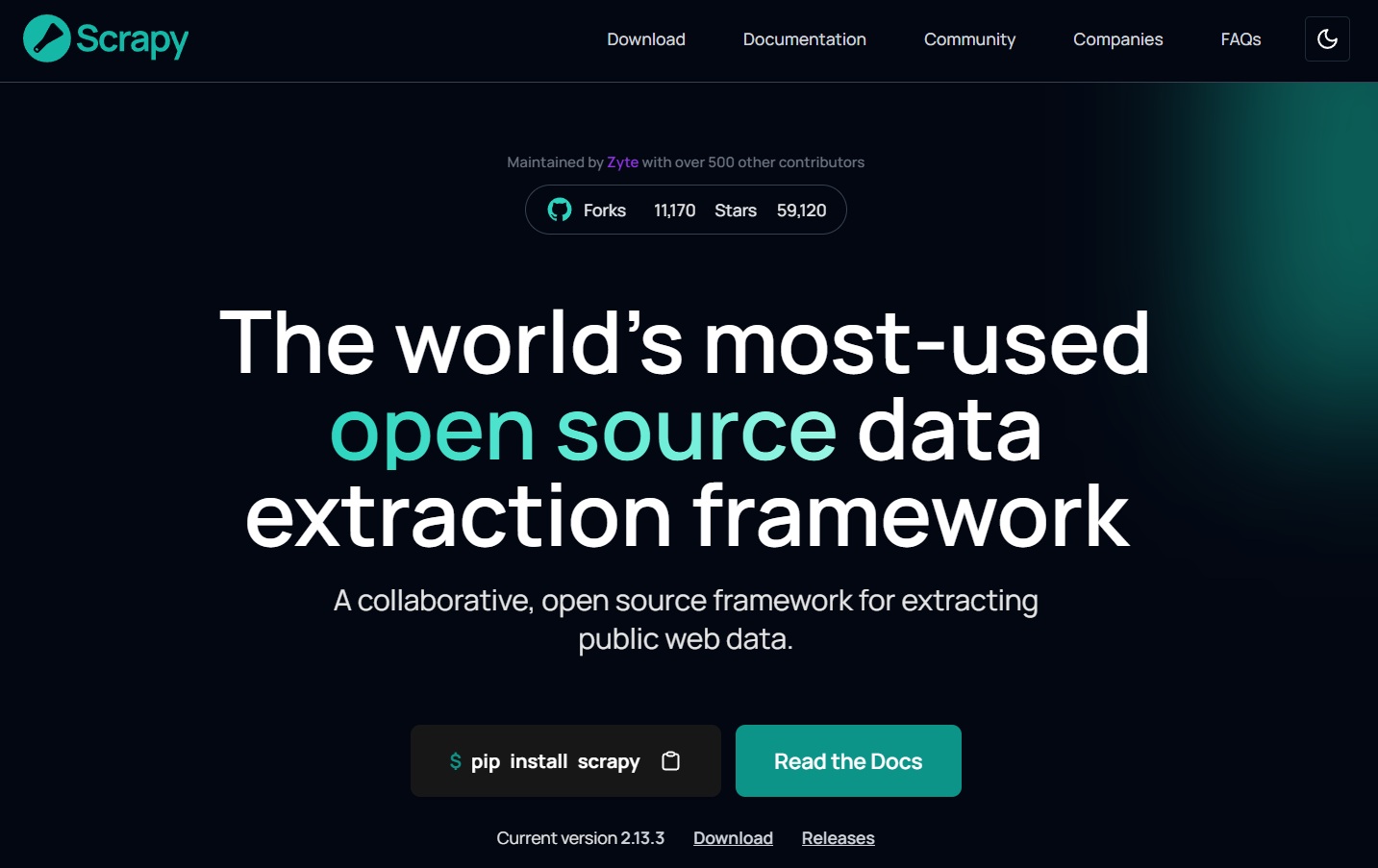
If you're already running Scrapy spiders, Zyte's ecosystem makes sense. You get cloud hosting, scheduling, and monitoring without rewriting your codebase. That's a real advantage for teams with existing Scrapy infrastructure.
AI-Powered Scraping
Scrapinghub was THE pioneer of web scraping when it launched as the first scraping API. When it became Zyte, it also became one of the first scraping APIs to natively integrate AI into its platform.
Their Web Scraping Copilot lets you generate ready-to-use structured data straight from the dashboard. No selectors, no parsing logic, no maintenance when sites change their HTML structure.
For teams who want data without code, this is genuinely useful. Point at a product page, get back clean JSON with price, title, and availability. The AI figures out where to find each field.
Downsides of Zyte
Here's where it gets painful. These are the reasons you're reading this article in the first place.
Poor Performance
Zyte does a decent job of categorizing websites into tiers based on anti-bot difficulty. Simple sites cost less, protected sites cost more. Makes sense on paper.
The problem? They don't actually scrape them well.
In our latest benchmark, Zyte API trailed the top of the field on success rate and was meaningfully slower than dedicated alternatives. Scrape.do and Bright Data both came back with near-perfect success in roughly half the time per request.
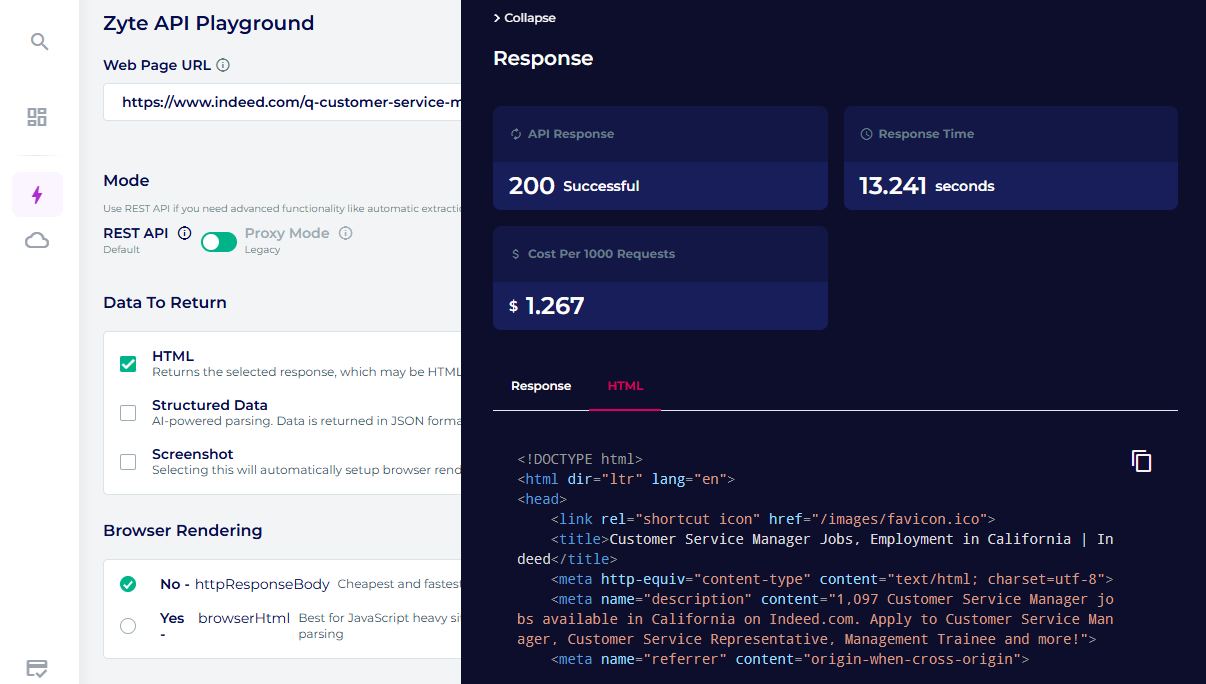
A few percentage points of success rate might not sound like much. But when you're scraping a million pages, that's tens of thousands of failed requests you're paying for anyway.
Unexpected Costs
Zyte handling headless browsers, residential proxies, and datacenter proxies for you sounds great on paper. You don't need to think about infrastructure. They figure out what each site needs.
But as you scale, that hand-holding turns into unpredictable pricing spikes.
The cost per 1,000 requests can swing wildly depending on which domain you're hitting, with the highest-tier sites costing more than a hundred times the cheapest. And you don't know which tier a site falls into until you start scraping it.
For large-scale crawling, this is brutal. You can't budget accurately when Zyte decides mid-crawl that a site suddenly needs premium proxies. You end up with invoices that look nothing like your estimates.
Support Experience
When you have performance problems or billing questions, you'd expect support to help. Zyte's Trustpilot rating of 3.1/5 tells a different story.
The reviews paint a consistent picture:
"Support is unhelpful and they don't care..."
"We created few tickets about the errors we were getting, they respond after 10+ days for a single ticket..."
"Overall very poor customer service..."
"Totally not willing to help at all. No easier smoother way to communicate with support..."
For Unblocked Web Scraping
If you're using Zyte API primarily for bypassing anti-bot systems and getting HTML back, these top web scraping APIs offer faster response times, higher success rates, and more predictable pricing.
| API Name | Avg. Success Rate | Avg. Response Time | Starting Price | Avg. Price per 1K |
|---|---|---|---|---|
| Zyte API | 91.43% | 15.8s | Pay-as-you-go | $1.29 |
| Scrape.do | 98.61% | 5.5s | Freemium | $0.60 |
| Bright Data | 98.87% | 12.7s | Pay-as-you-go | $1.50 |
| ScraperAPI | 72.57% | 5.6s | $49 | $4.25 |
| Decodo | 94.20% | 10.7s | $19 | $0.71 |
Updated May 2026: refreshed every row with our latest benchmark numbers and added Decodo, the rebranded Smartproxy, which sits in a similar mid-tier reliability bracket to Zyte but at a fraction of the per-1K cost.
1. Scrape.do
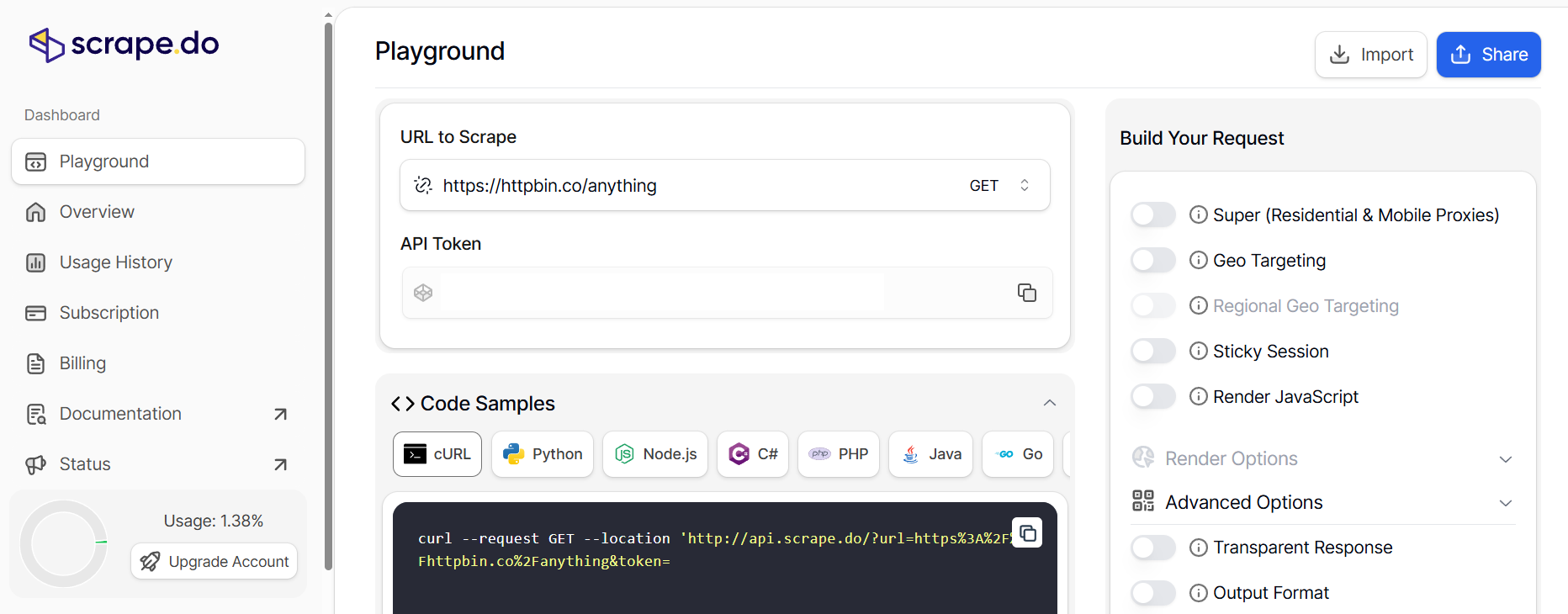
If Zyte's unpredictable pricing and sluggish response times are driving you crazy, Scrape.do is the antidote.
The platform operates 110+ million IPs across datacenter, residential, and mobile networks. But here's what matters: 98+% success rates at sub-5-second average response times. That's 2x faster than Zyte with higher success.
The pricing model is refreshingly transparent. You know exactly what you're paying: 5x for rendering, 10x for premium proxies, 25x for both. No surprises.
Pros
- Fastest response times in the industry: roughly three times faster than Zyte on average, which compounds when you're scraping millions of pages
- Higher success rate: a clear gap over Zyte in our latest benchmark, fewer failed requests means less wasted money and cleaner data pipelines
- Transparent pricing: predictable per-1K averages with clear credit multipliers, so you can actually forecast your costs
- Generous free tier: 1,000 requests monthly, no credit card required. Test before you commit.
Cons
- No official SDKs: Community SDKs exist, but no official libraries for major languages.
- No AI extraction: Focuses on raw HTML delivery. You'll need to handle parsing yourself.
Zyte vs Scrape.do
This comes down to what you need. Zyte gives you AI-powered extraction and Scrapy integration. Scrape.do gives you raw speed and predictable costs.
If you're already parsing HTML yourself and just need reliable unblocking, Scrape.do delivers better performance at half the price. If you need structured data without writing selectors, Zyte's AI features might justify the slower speeds and higher costs.
For most developers who know how to parse HTML, Scrape.do is the better choice.
Check in-depth comparison of Scrape.do vs Zyte or start free with Scrape.do and see the difference for yourself.
2. Bright Data
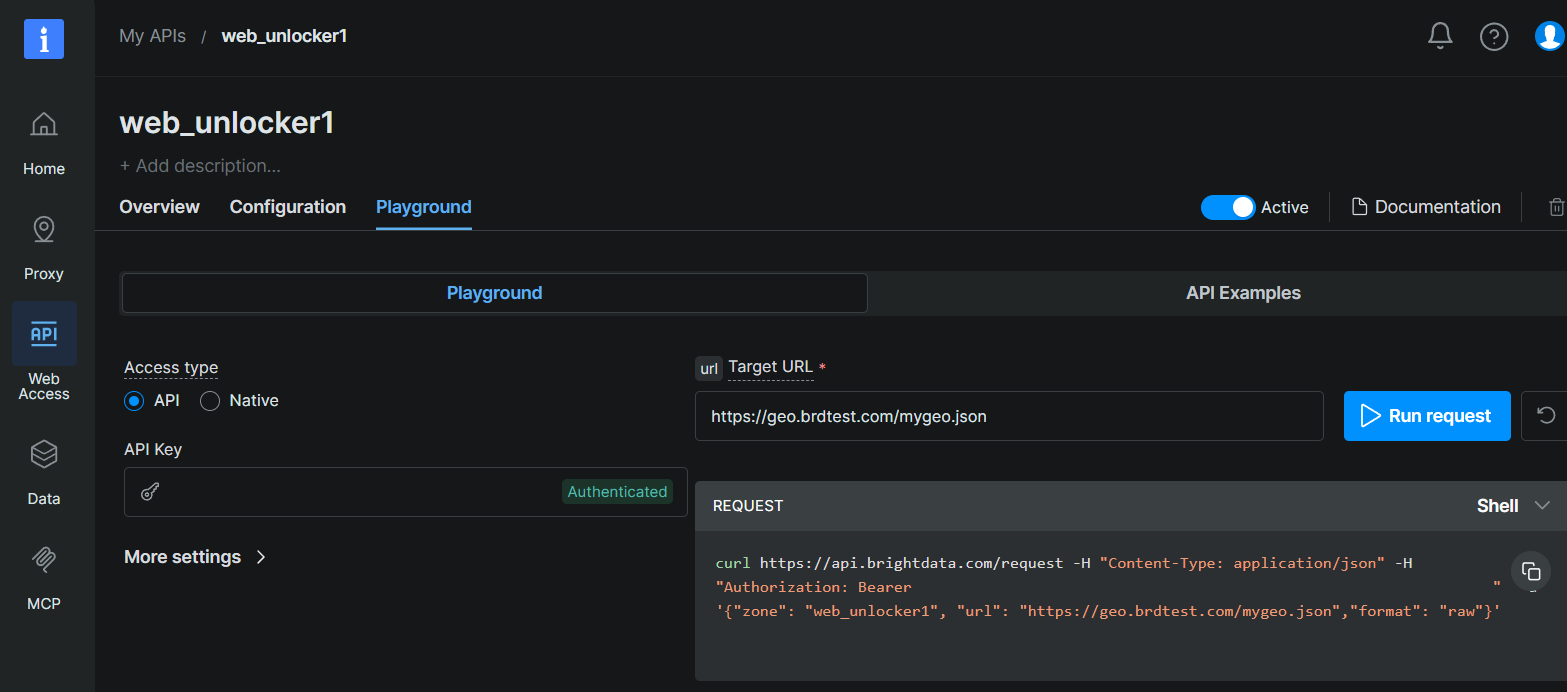
Bright Data is the enterprise heavyweight. They operate over 150 million IPs across 195 countries, the largest proxy network in the industry.
In our latest benchmark, Bright Data posted the highest success rate of any provider. If reliability is non-negotiable and budget is flexible, Bright Data delivers.
The catch? You pay a premium for that reliability. A flat $1.50 per 1K requests across the board, even for simple sites that other providers scrape for pennies.
Pros
- Highest success rate: leads every competitor in our latest benchmark, which matters most on protected sites
- Massive IP pool: 150M+ IPs means you're unlikely to run into IP reputation issues even at massive scale.
- Automatic parameter selection: The API figures out what each site needs. No trial-and-error with proxy types or rendering options.
- Ready-made scrapers: 120+ no-code data collectors for popular sites if you don't want to build your own.
Cons
- Static pricing hurts on simple sites: the same flat rate whether you're scraping a static blog or a Cloudflare-protected e-commerce site. No cost optimization possible.
- No free tier: Only free trials available. You can't test long-term without paying.
Zyte vs Bright Data
Both target enterprise customers, but they approach it differently.
Zyte offers Scrapy integration and AI extraction. If you're already in the Scrapy ecosystem, that's valuable. Bright Data offers the larger proxy network and higher success rates, but no framework integration.
Bright Data clearly leads Zyte on success rate in our latest benchmark. If raw reliability matters more than Scrapy compatibility, Bright Data wins. If you need structured data extraction without code, Zyte's AI features are more mature.
3. ScraperAPI
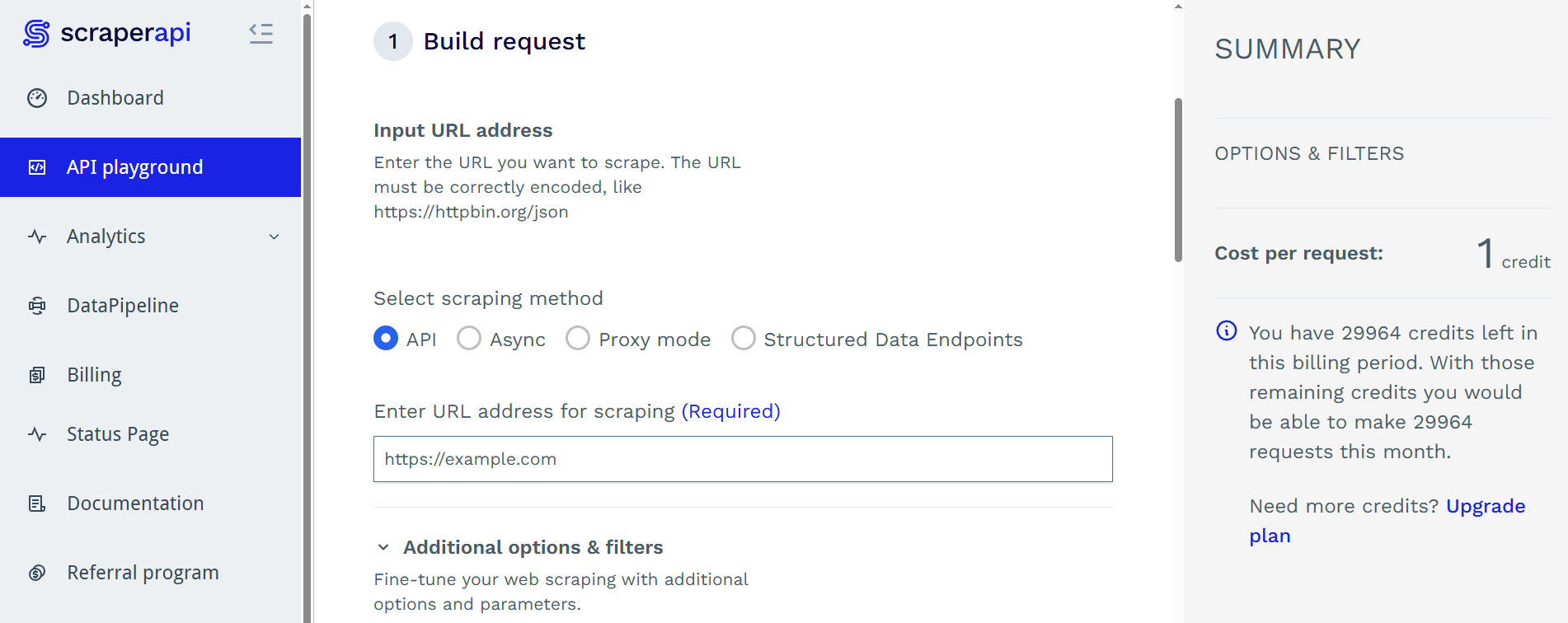
ScraperAPI positions itself as the simple option. Send a URL, get HTML back. They handle proxies, CAPTCHAs, and retries behind the scenes.
The reality is more complicated. In our latest benchmark, ScraperAPI is faster and cheaper than it used to be, but its reliability has dropped to one of the lowest in the field, with success rates trailing Zyte by a wide margin on protected sites.
Where ScraperAPI shines is pre-built templates for SERP and e-commerce scraping. If those match your use case, the convenience might be worth it.
Pros
- Pre-built templates: Ready-made solutions for Google SERP, Amazon, and other common targets. Less code to write.
- Simple integration: Straightforward API without complexity. Good for teams new to scraping.
- Faster than it used to be: response times have improved sharply, putting ScraperAPI among the faster providers when a request succeeds
Cons
- Reliability now trails the top tier: ScraperAPI dropped to one of the lowest success rates in the field in our latest benchmark
- Per-1K still inflates on premium tiers: the base rate is cheap, but credit multipliers on protected sites push the effective cost well above the headline rate
- Lower overall reliability than Zyte: the success-rate gap is now substantial, you're paying for retries on top of the per-1K rate
Zyte vs ScraperAPI
Honestly? Zyte wins this comparison UNLESS you are looking for dedicated scrapers for Google SERP, Amazon, and a dozen other targets.
Zyte has better success rates than ScraperAPI in our latest benchmark, plus AI extraction and Scrapy integration. ScraperAPI now wins on raw speed but loses on the reliability that actually matters at scale.
The only reason to choose ScraperAPI over Zyte is if their pre-built SERP or e-commerce templates exactly match what you need and you value that convenience over performance.
4. Decodo
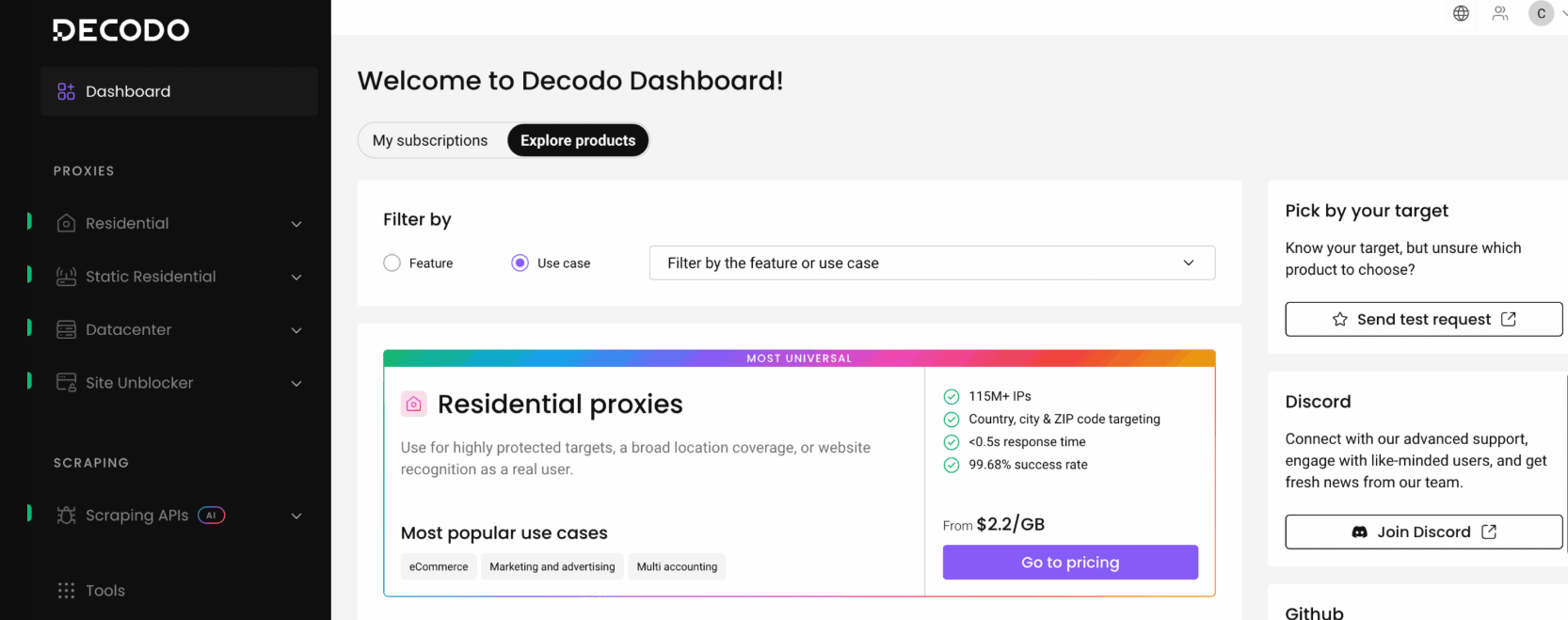
Decodo is the rebranded Smartproxy. The renamed service ships a Web Scraping API alongside its proxy products, with one endpoint that takes URLs and returns parsed HTML or JSON for popular targets like Amazon, Google, Walmart, YouTube, and Reddit.
In our latest benchmark, Decodo landed in the same mid-tier reliability bracket as Zyte at a fraction of the per-1K cost. Where Zyte's per-call rate swings wildly with site tier, Decodo's pricing is much more predictable.
Pros
- Cheap on standard targets: per-1K rates land at a small fraction of Zyte's average, with most domains on the entry-tier rate
- Predictable pricing: per-request pricing is easier to budget against than Zyte's site-tier swings, you know what a 100K-request job costs before you run it
- Dedicated parsers for high-value verticals: structured parsers for Amazon, Bing, Google, Reddit, Walmart, and YouTube let you consume JSON instead of writing selectors against HTML
- $19 entry plan with a free tier: lower commitment than Zyte's pay-as-you-go floor, plus a free plan for testing
Cons
- Brand transition is still confusing: most third-party docs and review pages still say Smartproxy, so expect to translate when searching outside Decodo's own help center
- Heavier targets push the price up: Zillow and X both bill on the premium tier in our tests, which trims the headline cost advantage on JS-heavy work
- Fewer dedicated parsers than competitors: six structured targets is mid-pack, outside ecommerce and SERP you're writing parsing logic yourself
Zyte vs Decodo
If you're paying for Zyte primarily because of Scrapy compatibility or the AI extraction features, Decodo doesn't replace those. But if you're paying for Zyte's unblocked-HTML API, Decodo gives you a comparable mid-tier success rate at a much lower per-1K cost, with pricing that's easier to forecast.
For Web Crawling at Scale
If you're using Zyte for Scrapy Cloud hosting or large-scale crawling operations, these alternatives offer different approaches to the same problem.
| Tool | Open Source Library | GitHub Stars | Hosted Service | Cloud Storage | Starting Price | Smallest Package | AI Features | MCP Server |
|---|---|---|---|---|---|---|---|---|
| Zyte | Scrapy | 59.1k | Scrapy Cloud | Yes | Free Plan Available | $9/month per unit | Available (Web Scraping Copilot) | [X] |
| Apify | Crawlee | 20.7k | Apify | Yes | Pay As You Go | $39 | [X] | Available |
| Crawlbase | [X] | [X] | Crawlbase | Yes | Hidden Prices - no free plan | Hidden Prices - no free plan | [X] | Available |
| Firecrawl | Firecrawl | 69k | Firecrawl | [X] | Free Plan Available | $19 | Available (Extract endpoint) | Available |
4. Apify
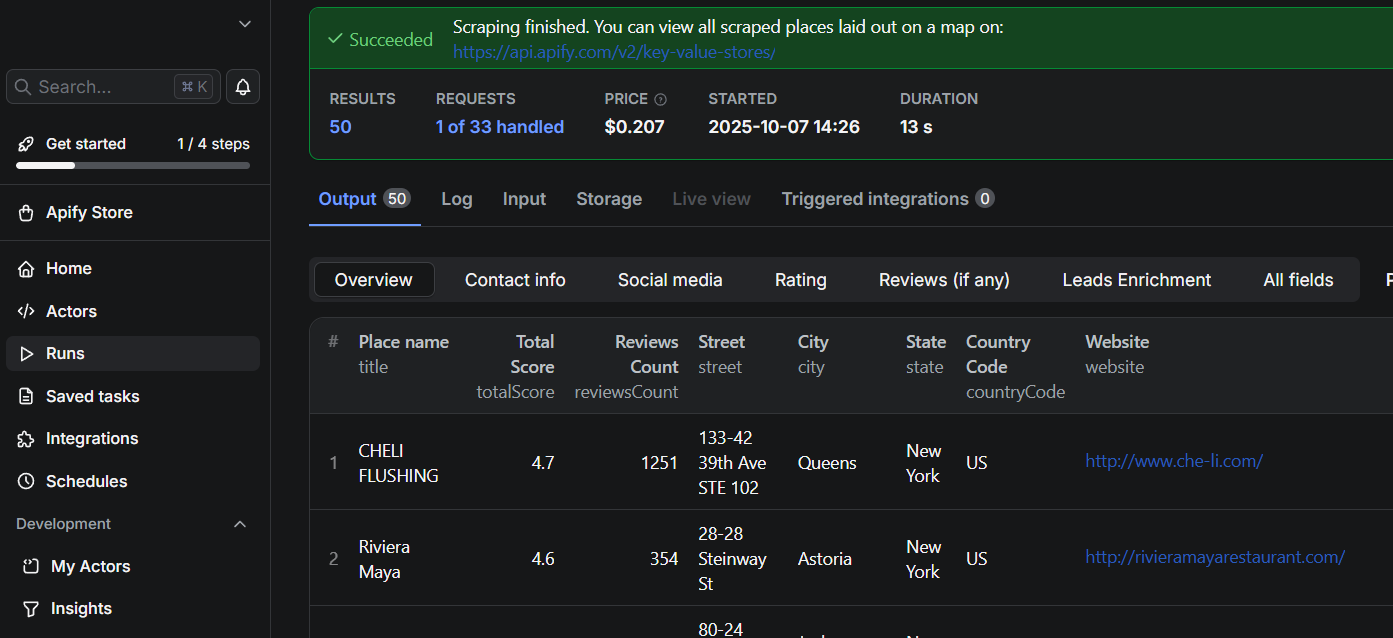
Apify takes a different approach than Zyte. Instead of building your own scrapers, you pick from a marketplace of 1,500+ pre-built "actors" that other developers have created.
Their open-source library Crawlee (20.7k GitHub stars) handles the heavy lifting for JavaScript/TypeScript crawlers. Think of it as Scrapy for the Node.js world.
The platform runs on serverless infrastructure. You don't manage servers. You just run actors and pay for compute time.
Pros
- Massive marketplace: 1,500+ ready-made actors for popular websites. Someone probably already built what you need.
- No DevOps required: Serverless infrastructure means you focus on scraping logic, not server management.
- Scrapy compatibility: You can actually run Scrapy spiders on Apify if you're migrating from Zyte.
- MCP server available: Integrates with AI agent workflows out of the box.
Cons
- Inconsistent actor quality: Community-built actors vary wildly in reliability and maintenance. Popular ones work well, niche ones might be abandoned.
- Can get expensive at scale: Reddit users report saving 90% by moving heavy crawlers from Apify to self-hosted Scrapy. The convenience comes at a cost.
- No unified API: Each actor has its own input schema and output format. You're learning a new interface for every scraper.
Zyte vs Apify
Both offer cloud hosting for scrapers, but the philosophies differ completely.
Zyte is Scrapy-native. If you're already running Scrapy spiders, deployment is seamless. You get the official maintainers of Scrapy running your infrastructure.
Apify is marketplace-first. You browse pre-built actors instead of writing code. Great if an actor exists for your target. Frustrating if you need custom logic and have to learn their SDK.
Zyte's 59.1k GitHub stars (Scrapy) vs Apify's 20.7k (Crawlee) tells you which ecosystem is more mature. But Apify's marketplace means you might scrape Amazon in 5 minutes instead of building a spider from scratch.
Choose Zyte if you have existing Scrapy code or want to build custom spiders. Choose Apify if you want pre-built solutions and don't mind paying for convenience.
5. Crawlbase
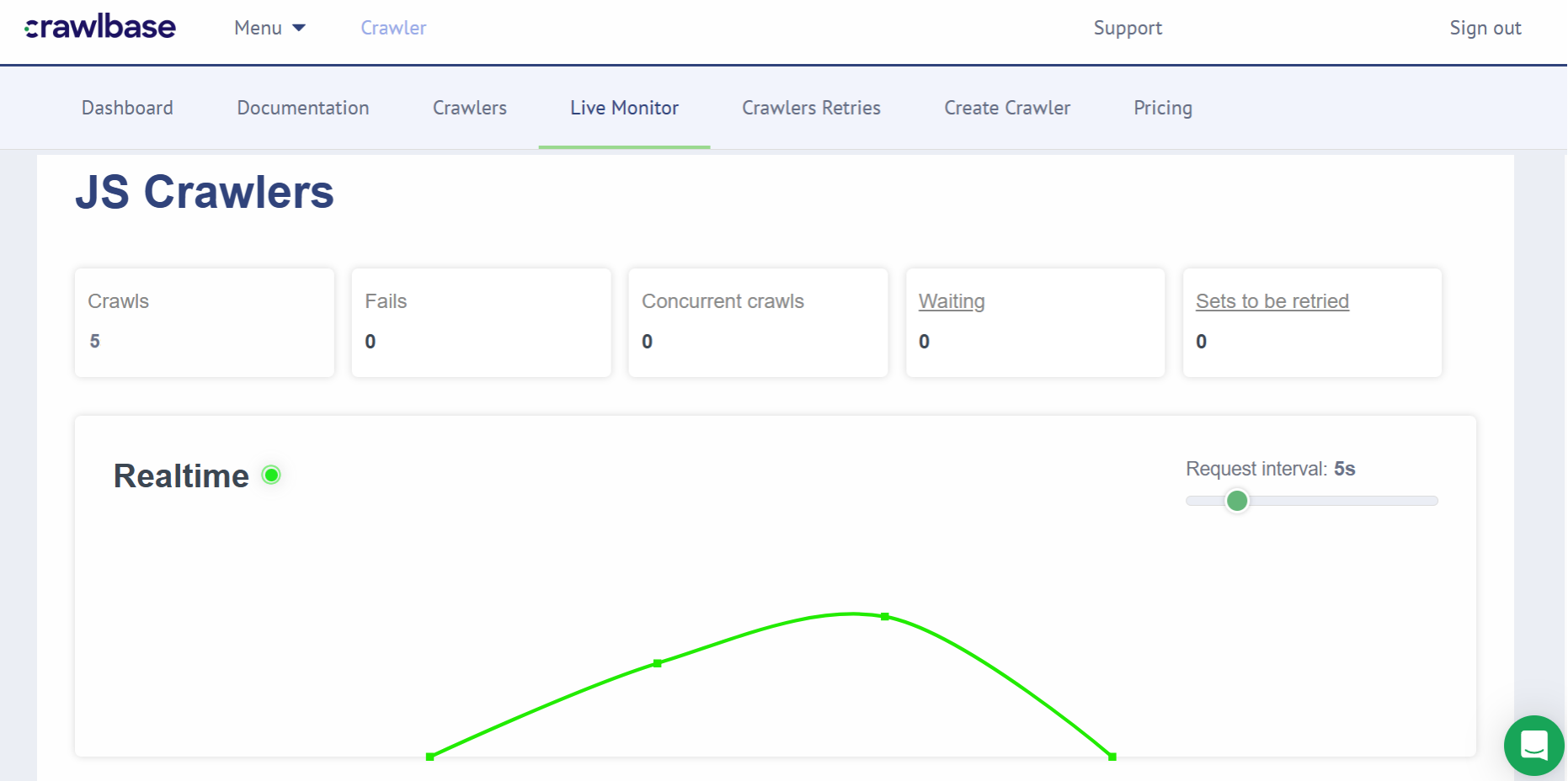
Crawlbase is one of the original scraping APIs, and it shows. The infrastructure is battle-tested for high-volume crawling, especially on e-commerce sites.
Reddit users describe it as having an "enterprise nature" with better pricing as you scale. The documentation is straightforward, and the API is designed for developers who want to handle parsing themselves.
The catch? Hidden pricing and no free plan. You have to contact sales to get started, which adds friction compared to alternatives with transparent pricing pages.
Pros
- Built for high-volume e-commerce: Reddit users specifically recommend it for crawling e-commerce sites at scale without managing your own proxy infrastructure.
- Good scaling economics: Pricing gets more favorable as volume increases. Enterprise users report better rates than consumer-focused alternatives.
- Easy setup with solid docs: G2 and Capterra reviews consistently mention quick setup and clear documentation.
- MCP server available: Integrates with modern AI agent workflows.
Cons
- Hidden pricing: No public pricing page. You have to contact sales to know what you'll pay. That's a red flag for many developers.
- No free plan: Can't test before committing to a sales conversation. Every other alternative in this list offers either free tiers or transparent trial credits.
- Token handling complexity: Some users mention implementation details around tokens and authentication as the main friction point.
Zyte vs Crawlbase
Both are veteran players in the scraping space, but they target different workflows.
Zyte gives you the full Scrapy ecosystem with cloud hosting, AI extraction, and transparent (if unpredictable) pricing. You can see exactly what you're getting before you pay.
Crawlbase is more opaque. Hidden pricing means you can't compare costs directly. But users who've gone through the sales process report good scaling economics, especially for e-commerce at volume.
If transparency matters, Zyte wins. If you're scraping millions of e-commerce pages and want enterprise-style pricing negotiations, Crawlbase might deliver better rates. You just won't know until you talk to sales.
6. Firecrawl
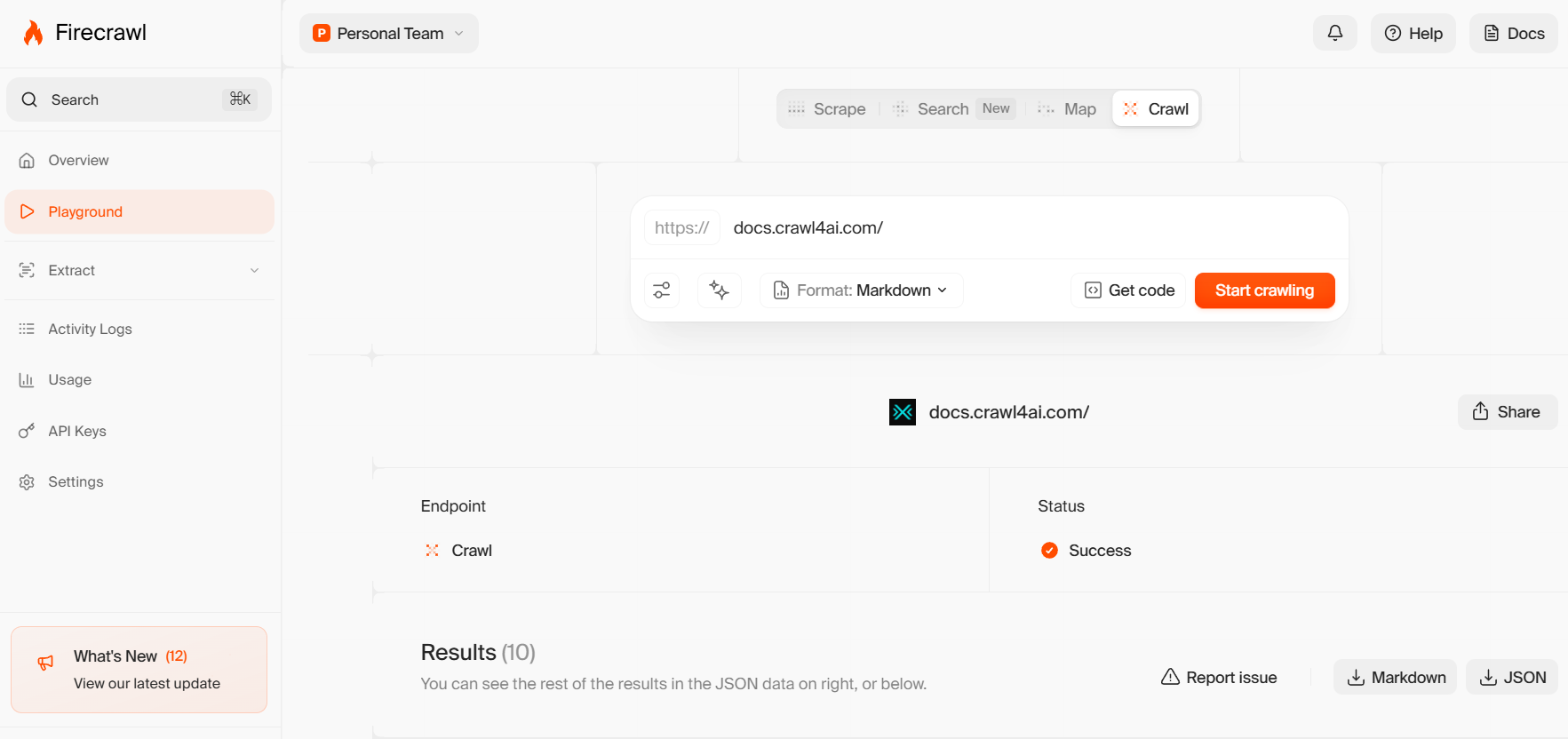
Firecrawl is the new kid that's growing fast. With 69k GitHub stars, it's actually more popular than Scrapy on GitHub (though much younger).
The pitch is simple: give Firecrawl a URL, get back clean markdown ready to feed into an LLM. No parsing, no selectors, no HTML cleanup. Just text your AI can actually use.
It's built specifically for the AI/LLM workflow that's exploded in the last two years. If you're building RAG pipelines or AI agents that need web data, Firecrawl speaks your language.
Pros
- LLM-ready output: Returns clean markdown instead of raw HTML. Your AI pipeline doesn't need to deal with HTML parsing.
- Dead simple for AI workflows: Integrates with n8n, LangChain, and other agentic tools. The "Extract" endpoint returns structured JSON from any page.
- Free plan available: Unlike Crawlbase, you can test before committing. $19/month gets you started on paid plans.
- MCP server available: First-class support for modern AI agent architectures.
- Fastest-growing community: 69k GitHub stars shows serious developer interest and active development.
Cons
- Expensive compared to DIY: Reddit users call it "so expensive" compared to open-source alternatives like Crawl4AI. You're paying for convenience.
- Scaling issues reported: Some users report admin UI bugs and problems when handling very large crawl jobs.
- Not built for heavy generic crawling: Works great for AI pipelines. Less recommended for traditional high-volume scraping where Zyte or Crawlbase shine.
Zyte vs Firecrawl
These tools solve different problems, despite both having "AI features."
Zyte's AI extraction gives you structured data from e-commerce pages: prices, titles, availability. It's designed for traditional scraping workflows that happen to use AI for parsing.
Firecrawl is built from the ground up for LLM pipelines. It doesn't care about extracting specific fields. It gives you clean text that GPT-4 or Claude can understand. The entire architecture assumes you're feeding output to an AI model.
If you're building traditional scrapers that extract specific data points, Zyte's approach makes more sense. If you're building AI agents that need to "read" web pages, Firecrawl's markdown output eliminates a whole layer of complexity.
Zyte is web scraping with AI assistance. Firecrawl is AI-first with web crawling as input.
What to Pick?
Six alternatives, two categories, one question: what do you actually need?
For Web Scraping API & Unblocking
If you're using Zyte primarily to bypass anti-bot systems and get HTML back:
- Scrape.do: Best overall. Near-perfect success rates, the fastest average response, and a clear cost advantage over Zyte. The obvious choice for developers who handle their own parsing.
- Bright Data: Best for enterprise. Highest success rate in our latest benchmark with the largest proxy network. Pay more for maximum reliability.
- Decodo: Best for cost-sensitive teams that don't need top-tier reliability. Mid-tier success rate at a fraction of Zyte's per-1K cost, with a $19 entry plan.
- ScraperAPI: Only if you specifically need their SERP/e-commerce templates. Otherwise, Zyte actually beats it on performance.
For Web Crawling at Scale
If you're using Zyte for Scrapy Cloud or large-scale crawling:
- Apify: Best for teams who want pre-built scrapers without writing code. 1,500+ marketplace actors, but quality varies.
- Crawlbase: Best for high-volume e-commerce. Enterprise pricing negotiations can work in your favor, but hidden pricing is frustrating.
- Firecrawl: Best for AI/LLM pipelines. If you're feeding web data to GPT-4 or Claude, the markdown output eliminates parsing entirely.
The Bottom Line
Zyte earned its place in web scraping history. Scrapy is still the most popular framework. The AI extraction features are genuinely useful.
But the performance gaps are real. Response times that are slower than competitors. Pricing that can spike without warning. Support that takes 10 days to respond.
For most developers moving away from Zyte, Scrape.do offers the best combination of speed, reliability, and transparent pricing. You'll scrape faster, fail less often, and actually know what you're paying.
Lead Software Engineer