Category:Scraping ToolsView as Markdown
Top 7 ZenRows Alternatives for Web Scraping in 2026

Lead Software Engineer


Is ZenRows a bit too pricey for your scraping operations?
Or you're not quite getting the success rates you need?
Then, you're in the right place.
Here are 7 alternatives that deliver comparable or better performance without forced parameter combinations or unpredictable pricing spikes.
| API Name | Avg. Success Rate | Avg. Response Time | Starting Price | Avg. Price per 1K Requests |
|---|---|---|---|---|
| ZenRows | 96.29% | 6.7s | $69 | $3.32 |
| Scrape.do | 98.61% | 5.5s | Freemium | $0.60 |
| Bright Data | 98.87% | 12.7s | Pay-as-you-go | $1.50 |
| ScrapingBee | 96.62% | 13.7s | $49 | $1.77 |
| ScraperAPI | 72.57% | 5.6s | $49 | $4.25 |
| ScrapFly | 93.86% | 5.6s | $30 | $2.85 |
| ScrapingAnt | 68.14% | 33.1s | $19 | $3.56 |
| ScrapingDog | 89.14% | 4.0s | $40 | $0.47 |
The table above compares ZenRows with six tested alternatives based on independent benchmark data from best web scraping APIs run across Amazon, Indeed, GitHub, Zillow, Capterra, Google, and X (Twitter).
Updated May 2026: refreshed every row with our latest benchmark numbers and added ScrapingDog, which is now one of the fastest and cheapest reliable picks in the test set.
What ZenRows Does Well
Before we cover alternatives, here's where ZenRows actually delivers value.
Fast Response Times
ZenRows came back among the fastest providers in our latest benchmark, with average response times in the single-digit-seconds range.
The speed advantage compounds when scraping large datasets or running time-sensitive operations.
Strong Success Rate on Mainstream Targets
ZenRows posted near-perfect success across several mainstream platforms in our latest tests.
For standard e-commerce and developer platforms, the reliability holds up where it counts.
Downsides of ZenRows
The problems start when you look at pricing transparency and forced parameter combinations.
Forced Parameter Combinations
ZenRows automatically enables both JavaScript rendering and premium proxies on certain domains with no option to disable them.
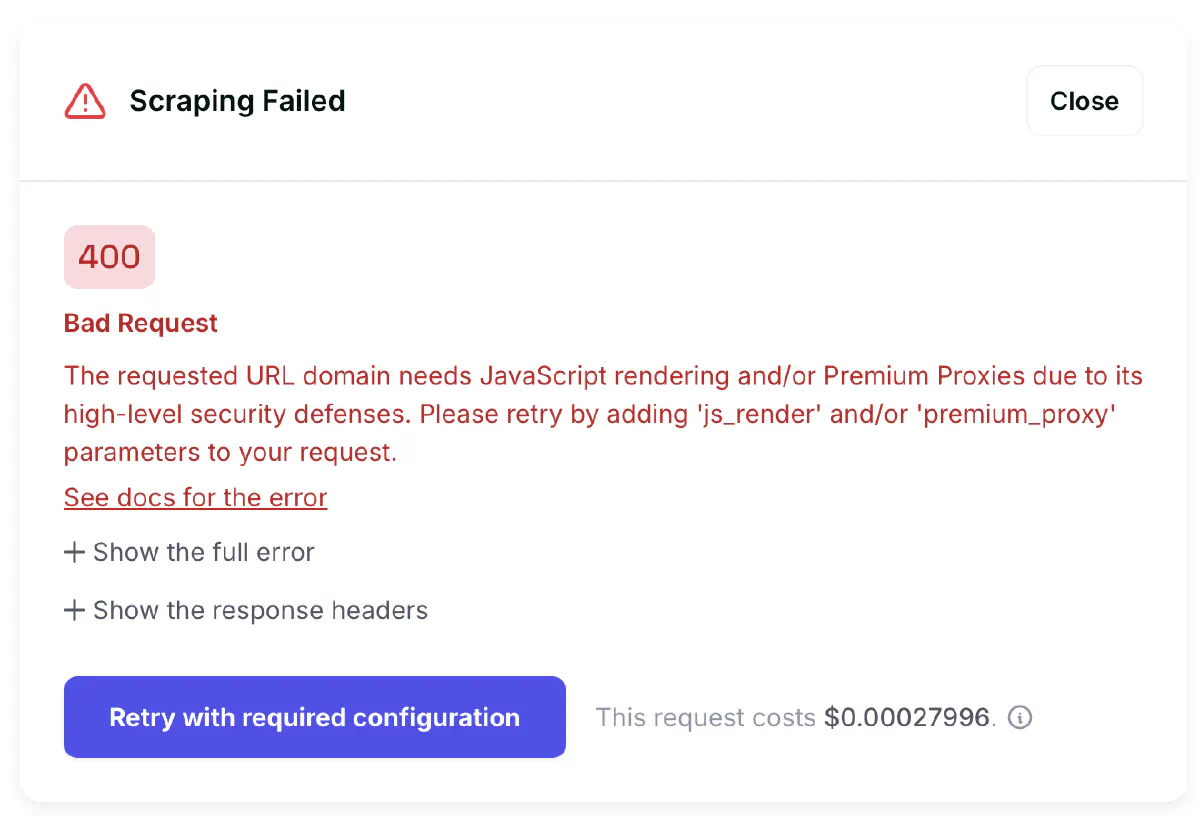
This forces you to spend 25 requests per call instead of 1, even when competitors can scrape the same sites with basic parameters.
There's no way to test cheaper configurations on these domains, eliminating any cost optimization opportunities.
Higher Starting Price
The $69/month Developer plan costs 41% more than most alternatives, but only includes 10K protected results with both rendering and premium proxies enabled.
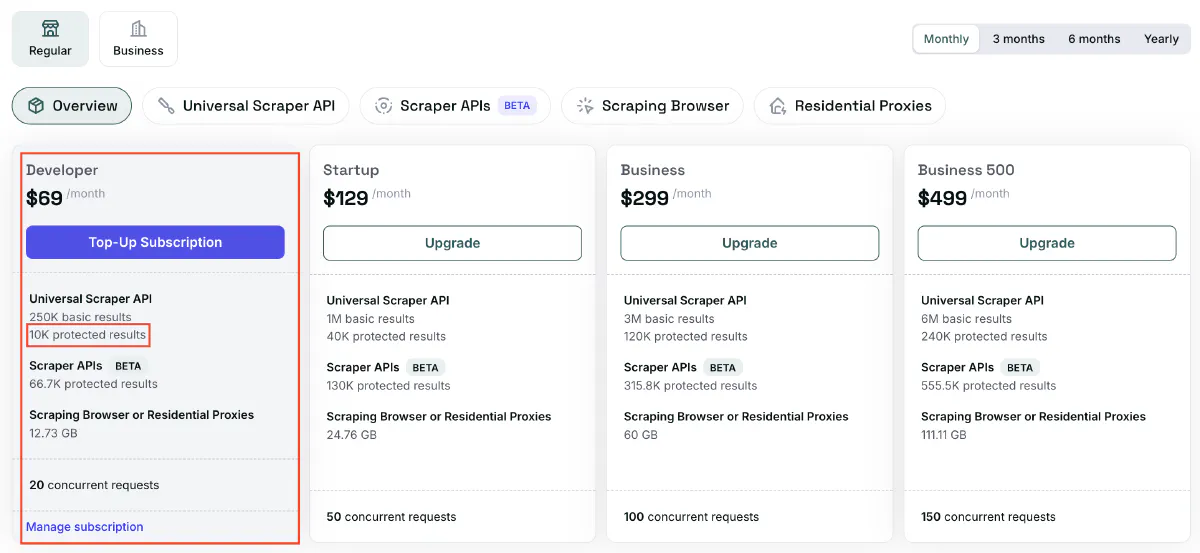
That's enough for testing but not for sustained production scraping.
Most competitors offer 100K-250K requests for $29-$49, making ZenRows expensive for the base allocation.
1. Scrape.do
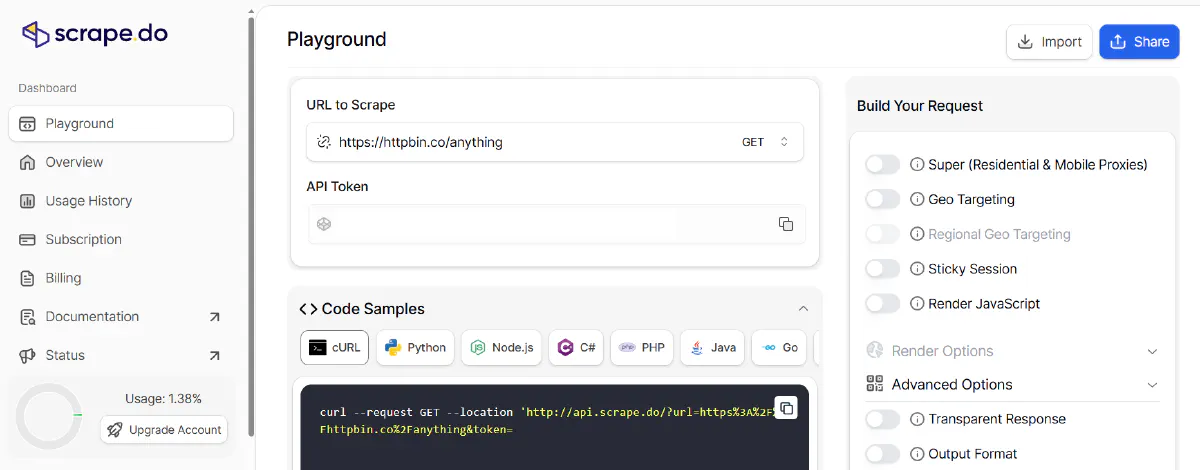
Scrape.do is a scraping API that delivers near-perfect success rates without verification gates or unpredictable pricing spikes.
The platform delivered near-perfect success rates and the fastest average response times across seven challenging domains in our latest benchmark. Scrape.do doesn't offer dedicated proxy services like ZenRows does.
Pros
- Unmatched speed and reliability: top-tier success rates and the fastest average response time across the tested domains, faster than every competitor and more reliable than all but one
- No forced parameter combinations, transparent pricing: Parameters are disabled by default. You opt in to rendering or premium proxies explicitly, and the credit multiplier applies only when you choose to enable features.
- Freemium plan with 1000 requests monthly for free: Perfect for testing or low-volume projects without time limits.
Cons
- Missing some integrations on AI platforms: No native LangChain or LlamaIndex support yet. You'll need to write custom wrappers if your workflow depends on these tools.
- No dedicated proxy services: Unlike ZenRows, Scrape.do doesn't offer standalone proxy products. You get proxy rotation as part of the scraping service, but can't use proxies independently.
ZenRows vs Scrape.do
Scrape.do is faster and more reliable with transparent pricing and no forced parameter combinations.
ZenRows offers dedicated proxy services that Scrape.do doesn't provide, making it better for teams that need standalone proxy access.
ZenRows has higher starting price but similar forced parameter issues, while Scrape.do delivers better value for pure scraping use cases at at least half. the cost.
Check in-depth comparison of Scrape.do vs ZenRows or start free with Scrape.do and see the difference for yourself.
2. Bright Data
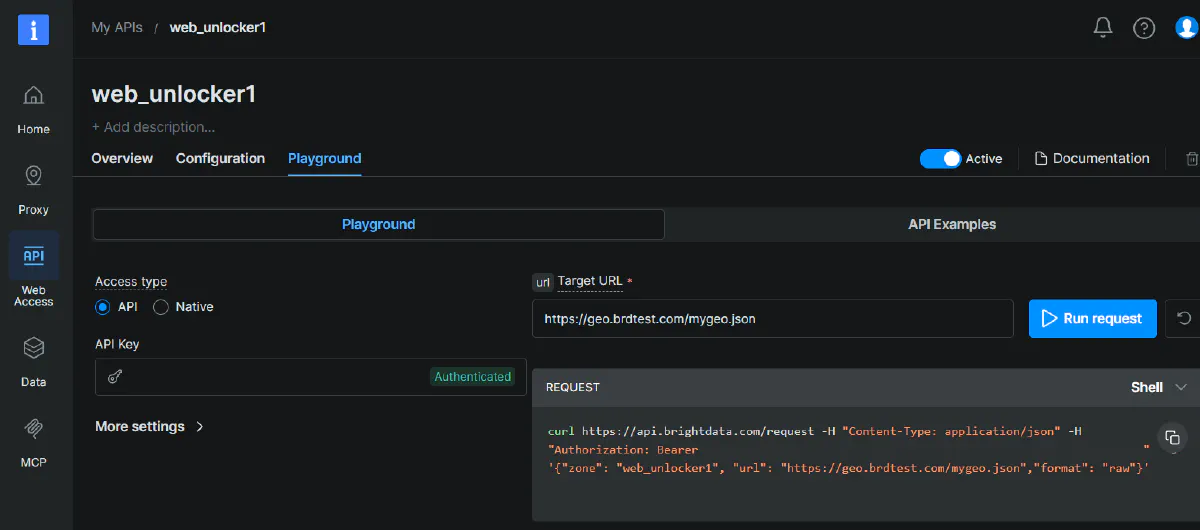
Bright Data is the enterprise standard for web scraping infrastructure, operating over 150 million IPs across 195 countries.
The company offers multiple products beyond basic scraping with automatic parameter selection and complete bypass capability. However, the static pricing model means you pay the same rate regardless of complexity.
Pros
- Best success rate in the industry: the highest among all providers in our latest benchmark, with reliability holding up even on heavily protected targets
- Static pricing removes guesswork on difficult domains: Premium sites like Walmart or LinkedIn cost a flat $2.50 per 1K requests regardless of complexity. Most competitors either charge unpredictable variable rates or fail entirely on these targets.
- Complete bypass capability: Handled every domain we tested without requiring custom configurations or workarounds. If a site is scrapeable, Bright Data will get through.
Cons
- Static pricing hurts on basic sites: You'll pay $1.50 per 1K requests even for simple pages that competitors scrape for cents. That's a heavy markup for lightweight operations where the infrastructure overhead isn't necessary.
ZenRows vs Bright Data
Bright Data has higher success rate and more predictable pricing with enterprise-grade infrastructure and static pricing that eliminates cost surprises.
ZenRows offers faster response times but suffers from forced parameter combinations that create similar unpredictability.
Bright Data is better for enterprise with static pricing model, while ZenRows provides more speed but less cost control.
3. ScrapingBee
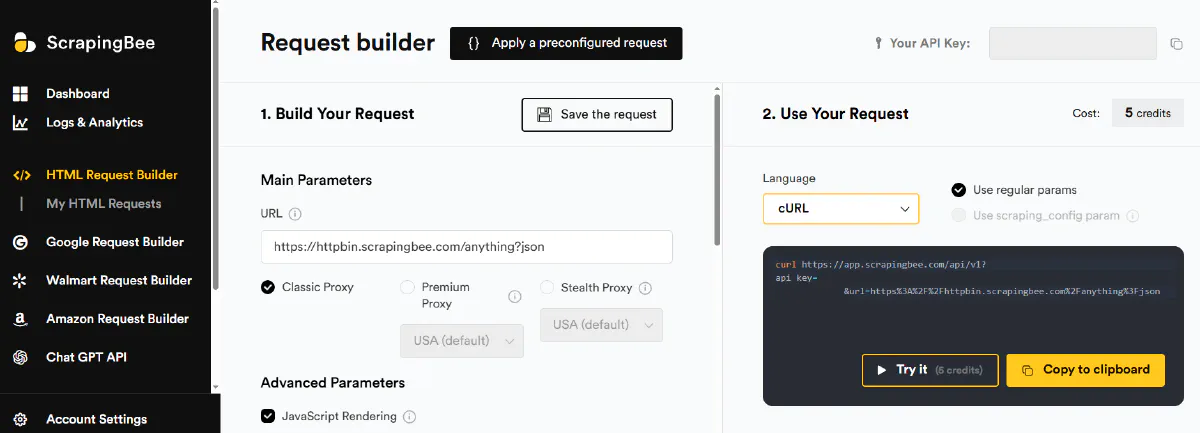
ScrapingBee offers an all-in-one API that manages headless browsers and rotating proxies with an emphasis on ease of use.
The platform includes an AI-powered extraction engine that accepts plain-English instructions and returns structured JSON or CSV output. However, the service struggles with speed and has unpredictable pricing spikes on protected domains.
Pros
- Success rate is solid: strong overall reliability with near-perfect performance on mainstream targets, works reliably on almost every popular website
- AI-powered extraction engine: Accepts plain-English instructions like "extract product names and prices" instead of writing custom CSS selectors or XPath expressions. This eliminates manual parsing work for common data extraction patterns.
Cons
- Slower compared to other alternatives: average response time trails both Scrape.do and ZenRows. When speed determines how many pages you can scrape per hour, that difference compounds.
- Base price can spike dramatically: Even though base price is $0.20 for 1K requests, it can go up to $15 for some popular domains due to stealth proxy requirements. This unpredictability makes budget planning difficult.
ZenRows vs ScrapingBee
ScrapingBee has AI extraction capabilities that ZenRows lacks, making it better for teams that want natural language data extraction.
ZenRows offers faster response times and more predictable pricing structure, though both suffer from cost spikes on protected domains.
Both have similar pricing spikes on protected domains, but ScrapingBee's AI features provide unique value for certain use cases.
4. ScraperAPI
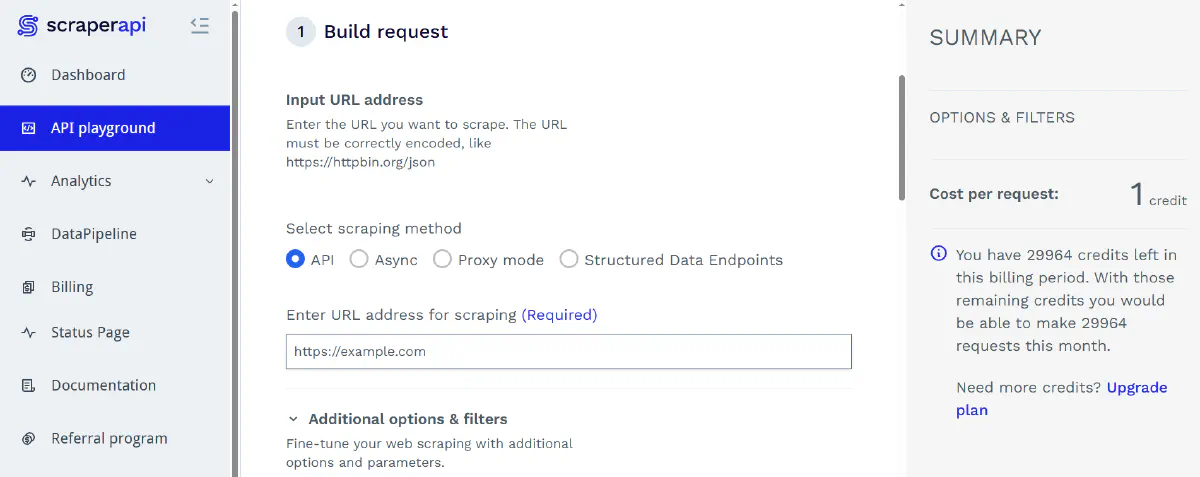
ScraperAPI is a cloud-based scraping platform that focuses on reliability and ease of use, charging per successful request rather than bandwidth.
The service automatically rotates proxies, handles CAPTCHAs, and supports geo-targeting with pre-built templates for common use cases. However, it struggles with speed and has the highest average cost per 1K requests among all providers tested.
Pros
- Fast on the endpoints that work: response times have improved sharply, putting it among the faster providers when a request succeeds
- Pre-built templates for common use cases: Includes ready-made scrapers for SERP, e-commerce, and real estate scraping. These templates handle pagination, rate limiting, and data extraction patterns without requiring you to build from scratch.
Cons
- Reliability now trails the top tier: in our latest benchmark, ScraperAPI dropped to one of the lowest success rates in the field on protected sites
- Per-1K still inflates on the tier you'll actually need: the base credit rate is cheap, but premium and ultra-premium proxy tiers multiply per-call cost on the very domains where you need them
ZenRows vs ScraperAPI
ZenRows offers far better reliability on protected sites than ScraperAPI in our latest benchmark, with comparable response times once you factor in retries on ScraperAPI's failures.
ScraperAPI has pre-built templates that handle common extraction patterns out of the box, while ZenRows requires more manual setup.
Both have similar success rates but different pricing models, with ZenRows providing better speed-to-cost ratio.
5. ScrapFly
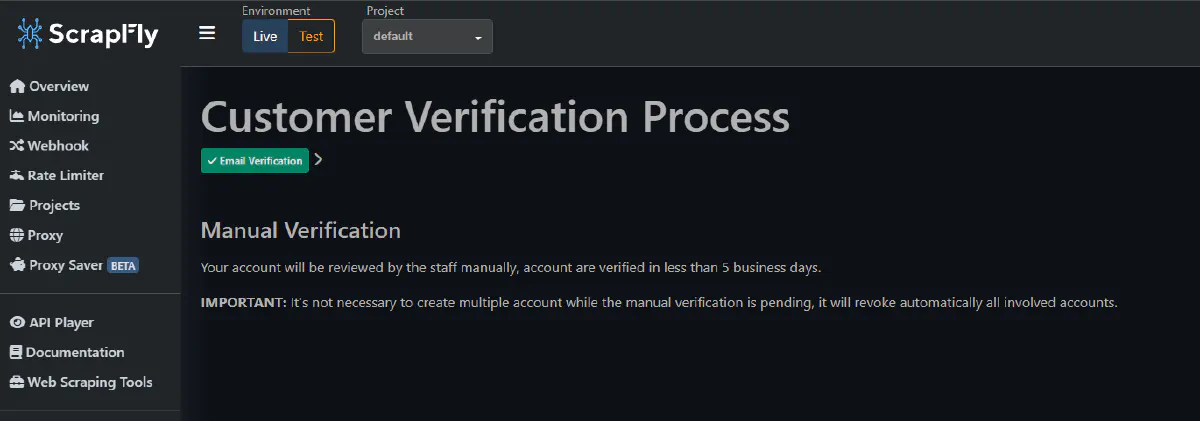
ScrapFly is a developer-focused platform offering three APIs: Web Scraping, Screenshot, and Extraction with AI-driven capabilities.
The service promises 99.99% uptime with battle-tested proxies and includes native integrations with LangChain, LlamaIndex, Zapier, Make, and N8N. However, it requires SMS verification and has similar pricing unpredictability to ZenRows.
Pros
- Lower starting price: At $30, it costs 57% less than ZenRows' $69. Teams with budget constraints can access the platform at a lower entry point, assuming they clear the verification barrier.
- Broader integration ecosystem: Native support for LangChain and LlamaIndex makes ScrapFly attractive for AI-powered scraping workflows. The Zapier, Make, and N8N connections enable no-code automation that ZenRows doesn't support.
- Dedicated Screenshot API: Offers full-page captures, element-specific screenshots, viewport customization, and format conversion. ZenRows provides basic screenshot functionality, but ScrapFly treats it as a first-class product feature.
Cons
- SMS verification required: You can't test the platform without providing a phone number. Multiple user reports mention getting banned without explanation, raising concerns about arbitrary enforcement and service reliability.
- Similar pricing spikes to ZenRows: per-1K averages now sit in a comparable range. Both services hide costs until you start scraping specific domains, making budget forecasting difficult.
- Can't verify performance: Testing was blocked by access restrictions, so the reliability and speed claims can't be validated against the same benchmark conditions used for other providers.
ZenRows vs ScrapFly
ZenRows has no verification barriers and better support since it allows instant testing without phone verification and provides clearer service terms.
ScrapFly offers more integrations and screenshot capabilities with LangChain, LlamaIndex, and dedicated screenshot API that ZenRows lacks.
Both have similar pricing unpredictability, but ScrapFly's broader ecosystem might justify the friction for teams with specific integration needs.
6. ScrapingAnt
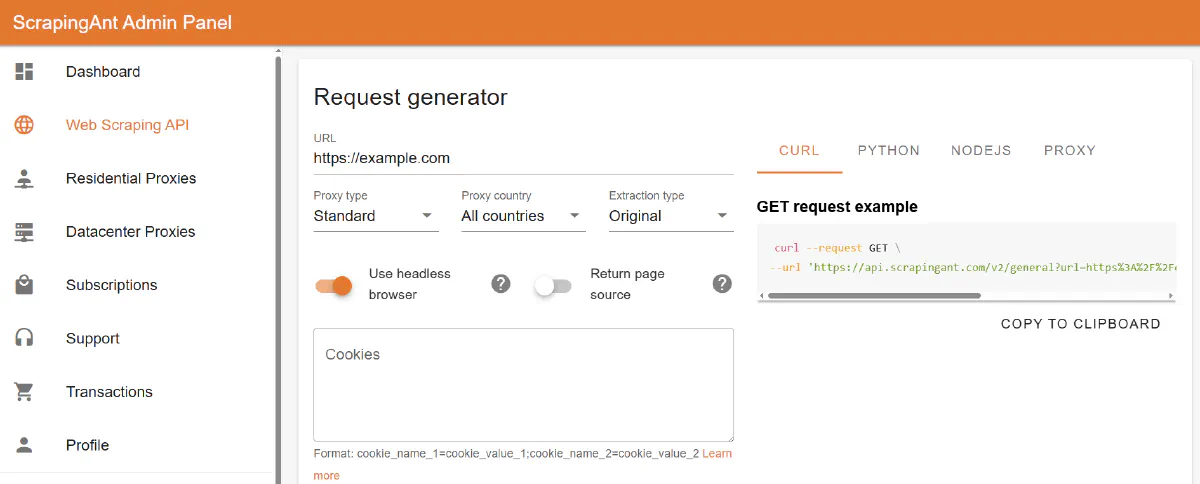
ScrapingAnt offers a credit-based scraping API with rotating proxies and headless browser support at the lowest entry price.
The service provides datacenter proxies by default with optional residential proxies, along with webhook support for asynchronous scraping. However, it suffers from catastrophic reliability issues and extremely slow response times.
Pros
- Cheapest starting price: At $19 for 100K credits, it costs 72% less than ZenRows' $69. For projects with extremely tight budgets or experimental use cases, the low entry point reduces initial commitment.
- Low base cost when it works: On the rare domains where ScrapingAnt succeeds, the cost drops to $0.19 per 1K requests. That's 96% cheaper than ZenRows' base rate.
Cons
- Reliability is the headline problem: ScrapingAnt has improved on its earlier numbers but still fails on a meaningful share of requests across the seven-domain benchmark, especially on heavily protected sites
- Slowest response times: average response trails the rest of the field by a wide margin. Even when requests succeed, the speed penalty makes large-scale scraping impractical.
ZenRows vs ScrapingAnt
ZenRows is much more reliable and faster in our latest benchmark, with a substantial reliability gap and an order-of-magnitude faster average response time.
ScrapingAnt is cheaper but unusable for production work due to catastrophic failure rates.
ZenRows provides better value despite higher price depending on the website, as reliability matters more than cost when requests fail more than half the time.
7. ScrapingDog
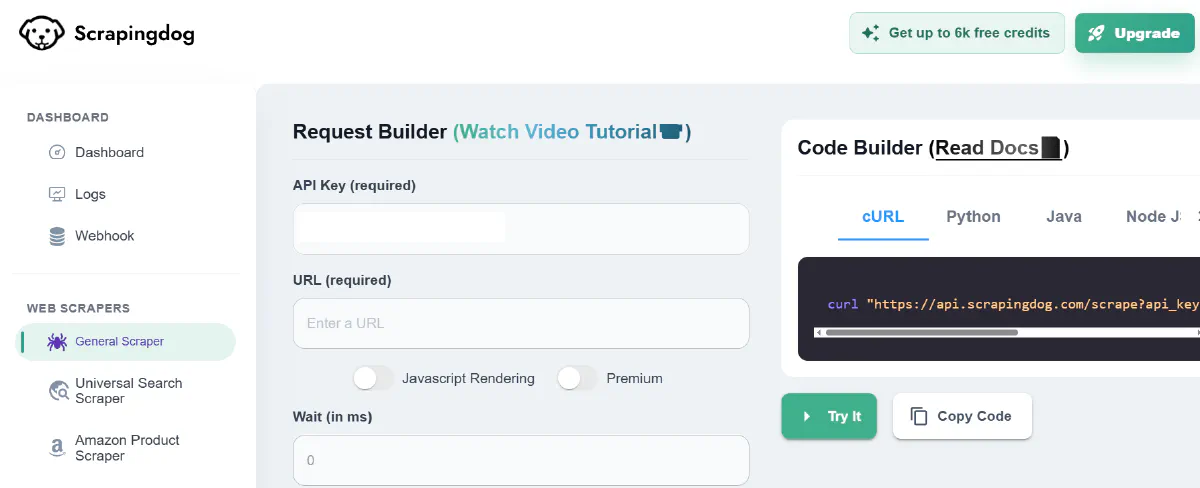
ScrapingDog is a cost-focused scraping API built around dedicated endpoints for popular targets — Amazon, Google, Indeed, Zillow, X, LinkedIn, YouTube, Walmart, eBay, and more. Instead of one generic endpoint plus parameter tuning, you call the right endpoint per target.
In our latest benchmark it came back as one of the fastest providers and the cheapest reliable option in the test set, a real turnaround from earlier rounds where its generic endpoint had struggled.
Pros
- Cheap on the right endpoints: per-1K rates land at a fraction of ZenRows' average when your targets fall inside the dedicated catalog
- Fast when it works: sub-five-second average response across the seven-domain benchmark, on par with the fastest providers
- No forced parameter combinations: ScrapingDog picks the right tier per endpoint, you don't get pushed onto a 25-credit combo on every call the way ZenRows does on certain domains
Cons
- Reliability still below the top tier: harder targets need verification on the free trial before you trust the endpoint in production
- Generic endpoint is weaker: targets outside the dedicated catalog fall back to a general path that performs less consistently
ZenRows vs ScrapingDog
ScrapingDog is the budget play if your scraping maps cleanly onto its dedicated endpoints. It's meaningfully cheaper per 1K than ZenRows on average and notably faster, but reliability trails the top tier. ZenRows wins on having one consistent API surface instead of a list of endpoints to wire up, and on the protected-site reliability gap.
What to Pick?
- For speed and reliability without pricing traps: Scrape.do delivers near-perfect success rates and the fastest average response with transparent opt-in parameters and no forced feature costs.
- For enterprise-grade infrastructure with predictable pricing: Bright Data provides the highest success rates in our latest benchmark with static pricing that eliminates cost surprises.
- For AI-powered extraction capabilities: ScrapingBee offers natural language data extraction that eliminates manual parsing work for common patterns.
- For pre-built templates on mainstream sites: ScraperAPI provides ready-made SERP and e-commerce scrapers that handle common extraction patterns out of the box.
- For broader integrations and screenshot needs: ScrapFly offers LangChain/LlamaIndex support and dedicated screenshot API capabilities, but SMS verification creates barriers.
- Skip entirely: ScrapingAnt's reliability remains too low for production work despite improvements.
- Overall, Scrape.do is the best alternative to ZenRows. It combines higher success rates, faster response times, and more transparent pricing without forced parameter combinations or unpredictable cost spikes.
Lead Software Engineer